The wound papers
A rat wound behind glow peptide benefits
The memorable percentages come from a wound experiment. Its subjects and its peptide both need to stay in the picture.
A cut tendon is a demanding test
In the 2003 BPC-157 experiment, researchers fully transected the Achilles tendons of Wistar rats. They assessed biomechanical strength, function and tissue appearance, and reported improved recovery with BPC-157. Rat tendon cells also showed outgrowth in dishes.
I give the tendon model credit for the difficulty of its test, rather than the loose word recovery. Strength, movement and microscopic appearance ask different questions of the same injured tissue. A finding across those measures is worth investigating. The experiment tested BPC-157 in animals; GLOW in an injured person remains untested here.
The vascular study adds a possible mechanism: BPC-157 increased VEGFR2 activity and vessel density in chick, rat and cell models. Angiogenesis is the formation of new blood vessels. That is a biological explanation to explore; human fracture and tendon trials are still needed.
Those percentages measure extra new-skin coverage
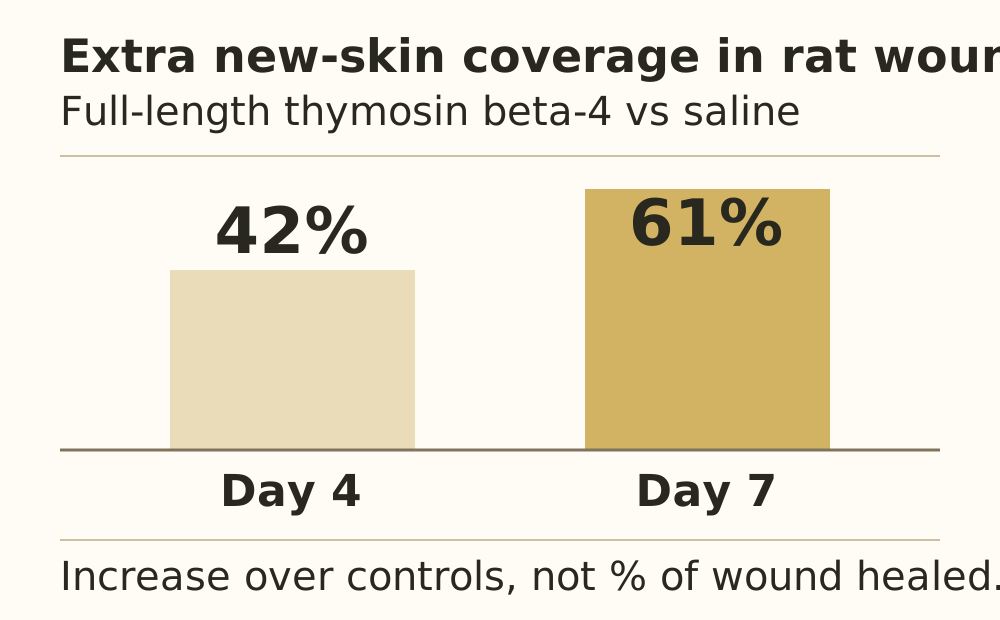
The 1999 rat wound study used full-length thymosin beta-4. Re-epithelialization, the regrowth of the surface skin layer, increased by 42% over saline controls at day 4 and 61% at day 7. The percentages describe the increase over the control, not the fraction of the wound that had healed.
That distinction changes the picture. A wound that is 61% healed and a 61% increase over a comparison wound are different statements. For a glow peptide before and after claim, these are useful measured changes to inspect, but there is no GLOW before-and-after comparison in this experiment.
I regard these figures as the most easily mislaid facts in the blend's story: precise enough to sound decisive, portable enough to lose their subjects. The rats, the saline comparison and full-length thymosin beta-4 belong with them every time.
The parent protein cannot stand in for its fragment
TB-500 is a short fragment of thymosin beta-4. The structural actin study concerns the parent protein's binding to actin, a protein involved in cell shape and movement; the regenerative review discusses that parent's wound, migration and scar-related biology. Most of the relevant efficacy work used the full-length molecule.
There is human work on the parent as well. A placebo-controlled safety study in 40 healthy volunteers gave full-length thymosin beta-4 intravenously, reporting infrequent mild-to-moderate adverse events and no serious adverse events. It did not establish the fragment's safety, the blend's safety or recovery from an injury.
The 2025 BPC-157 review found only three small human pilot studies and called for better trials. I cannot lend the fragment its parent’s results. The next persuasive recovery finding would have to use the actual preparation named in the claim.