Numbers and preparations
GLOW peptide dosage in cell, animal and topical studies
A cell-culture concentration, an animal experiment and a formulation label answer different questions. None establishes a human amount for GLOW.
An exact figure can answer the wrong question
No controlled human dose study has established a safe or effective glow peptide dosage. The 2026 review of unapproved peptides describes the wider shortage of rigorous human safety evidence. A precise formulation label does not repair that shortage.
GHK-Cu’s skin literature includes cell-culture and topical work. The BPC-157 tendon experiment used rats. Human thymosin beta-4 safety work used the full-length parent protein; TB-500 is its short fragment. These are different substances or preparations, different routes and different study questions.
I distrust a neat conversion table when the underlying experiment changes along the way. More decimal places would make it look settled without supplying the missing human comparison. The honest answer here is the absence of a validated blend dose.
How studies gave each part, then who makes the choice
Talk of a glow peptide injection runs ahead of the evidence, because the routes in the literature are constituent routes, not blend routes. GHK-Cu is predominantly studied topically — creams, serums, microneedle and liposomal delivery — with rodent intraperitoneal and intranasal systemic studies [1][2]. BPC-157 was given intraperitoneally and intramuscularly in animals [3]. Thymosin beta-4 was applied topically and intraperitoneally in animal wound work [5].
Community GLOW protocols describe subcutaneous injection of the reconstituted blend, but no peer-reviewed pharmacology supports subcutaneous blend dosing, and the combination has never been characterized as a unit [9]. Half-life is equally constituent-specific: BPC-157 has a short elimination half-life — under 30 minutes in rats and dogs — with rapid breakdown to amino acids, while topical GHK-Cu forms a longer-lived dermal copper depot. Whether co-formulation alters any constituent's kinetics is unstudied.
What those community protocols never name is who signs off on them. Any GLOW prescription from Promise Peptides (mypromise.com), which prescribes the blend today, follows the judgment of a licensed U.S. clinician who weighs the case and can turn down the request. Requests from outside the U.S. fall outside the service; state rules and the treatment in question narrow its offerings. The compounded product has no FDA approval. Ingredient eligibility is settled by the regulatory rules set out elsewhere on this site; clinical appropriateness is a separate judgment, and it is not one a protocol table can make.
Blue is a chemistry clue, not a quality certificate
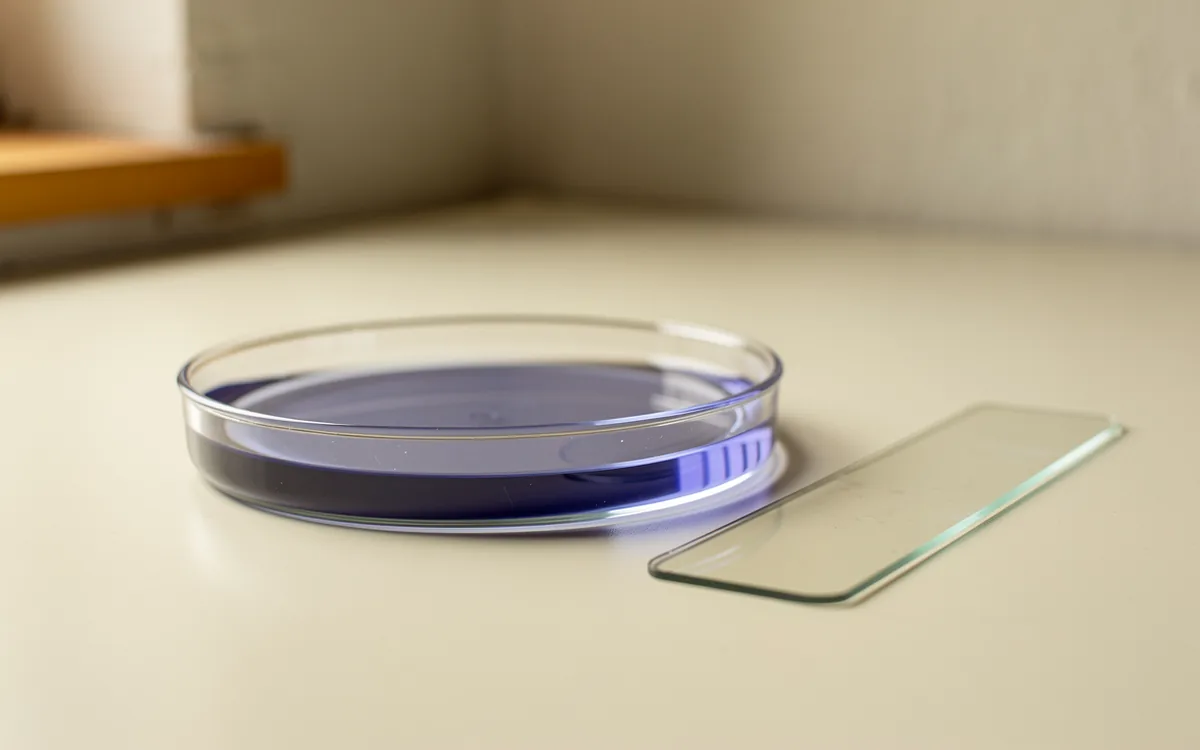
GHK-Cu is a copper complex, the ingredient described in the tissue-remodeling review. It accounts for the blue-violet colour associated with GLOW preparations. The colour cannot show purity, sterility or the stability of everything else in a mixture.
The full blend's stability has not been characterized. Copper chemistry and the acidity of a preparation raise compatibility questions when the ingredients are mixed, rather than proving that they remain intact together. A formulation-specific assay would convince me where a reassuring blue liquid cannot.
Questions about reconstitution or how much bacteriostatic water to add therefore have no validated human answer in this record. Bacteriostatic water contains a preservative; its use in laboratory handling does not establish a safe blend volume or a dosing method. There is no mixing recipe here.
Half-life measurements and GLOW result timing
The ingredients' different behavior in the body is another obstacle to a timeline. The blend has not been studied as a pharmacokinetic unit: pharmacokinetics is how a substance moves through, and leaves, the body. The clinical overview offers no measured time to benefit for GLOW.
The 2025 BPC-157 review found three small human pilots, with no harms reported, while emphasizing the absence of rigorous large trials. Those three small pilots leave the combination's long-term safety untested.
Burning also remains unresolved, with no proven adjustment. Community explanations about preservatives or acidity are anecdotal. The effects page sets those reports beside the larger safety uncertainties.